
The Backbone of the Bull Market Is Being Tested: Understanding AI Infrastructure and Market Signals
Jul 16, 2026
For investors closely monitoring market dynamics, understanding the underlying infrastructure supporting key themes is crucial. While much attention is often directed towards headline technology names, some of the earliest and most significant clues about the health of a market trend can emerge from less obvious sources.
This analysis delves into recent market activity, focusing on South Korea, semiconductor performance, and capital flows, to provide a comprehensive view of the AI infrastructure theme and its broader implications for the market.
The KOSPI as a Leading Indicator for AI Infrastructure
If there is one market worth watching closely this week, it is South Korea. This might sound surprising, but some of the earliest clues about the AI infrastructure theme often emerge from the broader semiconductor supply chain rather than the headline technology names.
The KOSPI has recently moved below its previous short-term low and, from a technical analysis perspective, remains in a short-term downtrend. Recent volatility has also been significant enough to trigger sell-side sidecars on the Korea Exchange. A sidecar is a market mechanism that temporarily pauses program trading following unusually sharp futures moves. It does not predict future direction, but it does highlight periods when volatility has accelerated.
CHART 1: KOSPI 4HR Trend
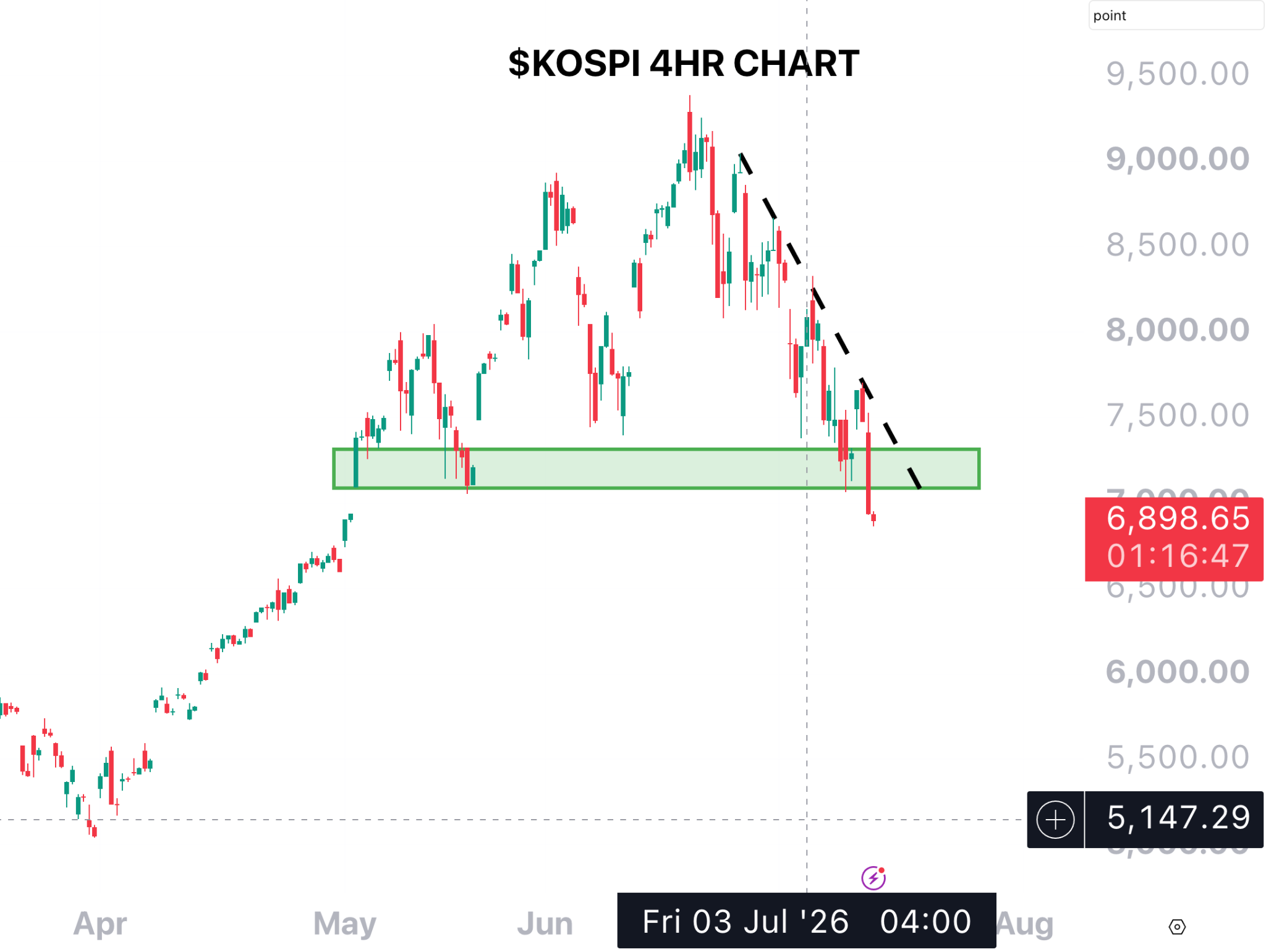
Things are getting volatile Source: TradingView / fxevolution.com
With TSMC reporting this week, investors will be paying close attention not only to the earnings numbers, but also to management commentary around AI demand, capital expenditure, and customer orders. These insights from key players in the semiconductor supply chain provide vital information about the underlying strength and future trajectory of the AI infrastructure theme.
SMH/SPY: The Backbone of the Hardware Trade
One of the preferred ways of monitoring the AI infrastructure theme is by observing the relative performance of SMH (VanEck Semiconductor ETF) to the S&P 500 (SMH/SPY). This chart is often referred to as the backbone of the hardware trade.
That relative strength chart has now returned to its 50-day exponential moving average, an area that has previously acted as an important technical reference point. Whether it holds or breaks remains uncertain. However, when markets repeatedly react around similar levels, they often provide useful context as new information is released.
CHART 2: SMH/SPY Relative Performance
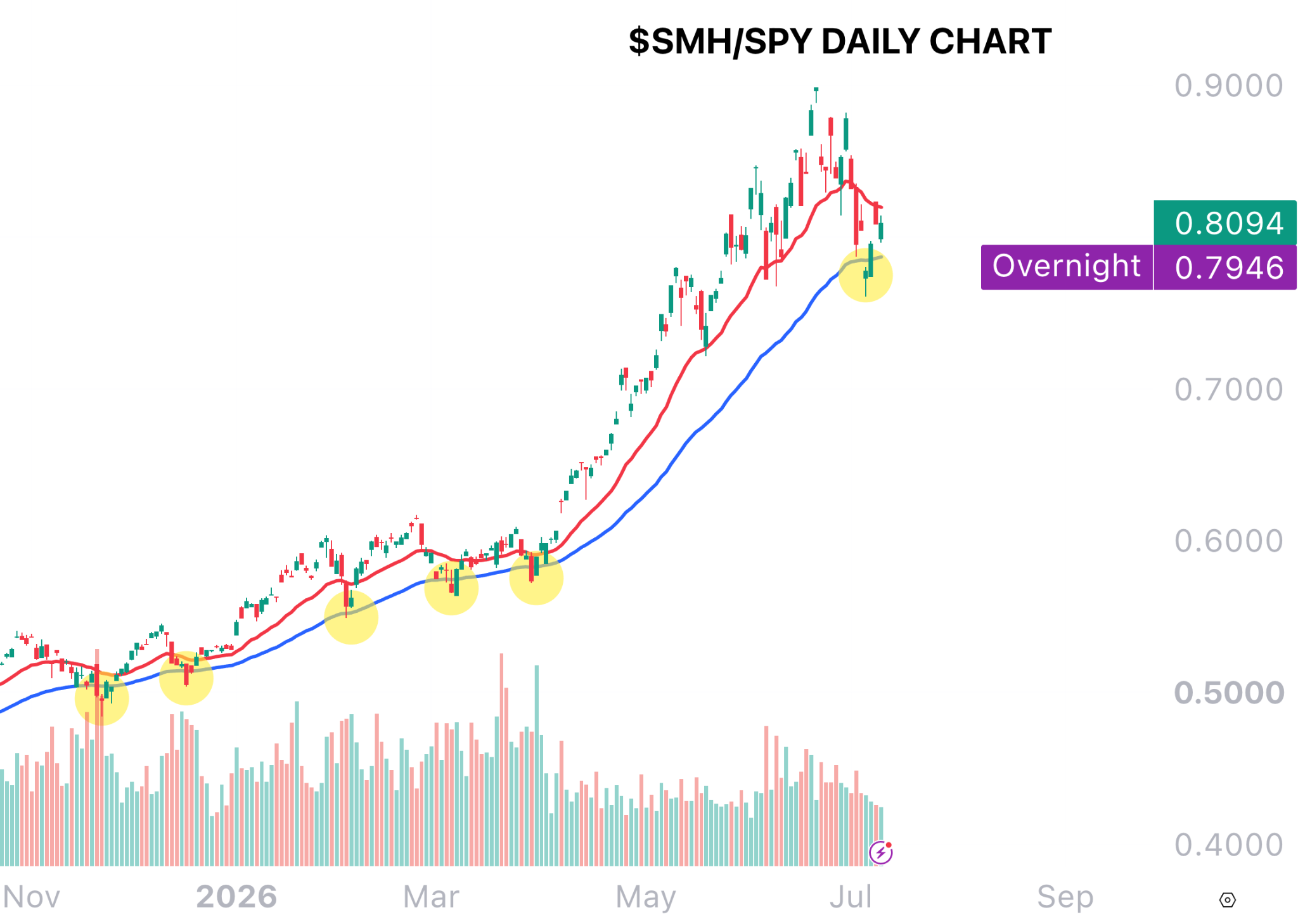
A huge test is here for the Semiconductor Trade Source: TradingView / fxevolution.com
This indicator helps assess whether the semiconductor sector, a critical component of AI infrastructure, is outperforming or underperforming the broader market, offering insights into the conviction behind the AI theme.
Capital Flows and Investor Sentiment
Recent market activity suggests investors remain willing to fund large-scale AI infrastructure projects. SK Hynix’s recent U.S. equity capital raising attracted strong institutional demand, while Amazon’s recent US$25 billion bond offering reportedly reached peak demand of around 1.6 times the amount issued before final pricing.
Neither transaction indicates where markets are heading. However, together they provide another perspective on how capital continues to be allocated across the AI ecosystem despite recent volatility. These capital flows are a tangible measure of investor confidence and commitment to the AI infrastructure build-out.
Earnings Season and Broader Market Context
While much of the attention this week will be directed toward technology, earnings season begins with the major US banks. Interestingly, the Financial Select Sector SPDR Fund (XLF) continues to trade within its broader uptrend, even as parts of the semiconductor and hardware trade have experienced increased volatility.
CHART 3: XLF Sector ETF
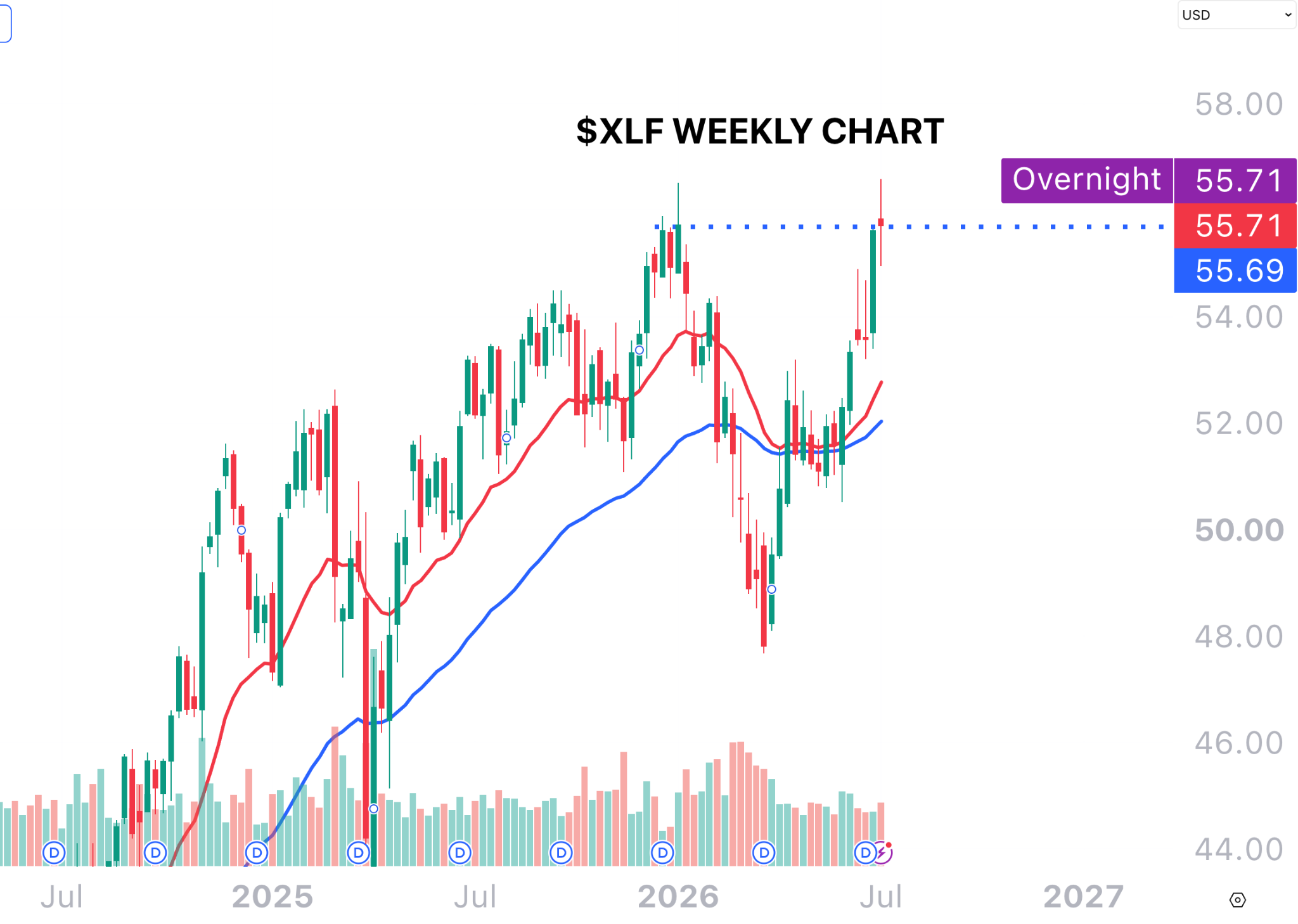
The Financial Sector Is Are Key Potential Resistance Before Earnings Source: TradingView / fxevolution.com
That observation does not establish a new trend. However, it may suggest recent weakness has been more concentrated within parts of the hardware sector rather than being reflected uniformly across the broader equity market. This highlights the importance of looking beyond single sectors to understand the overall health and breadth of the market.
Interpreting Market Signals: Looking Back Before Looking Forward
Any one of these developments, viewed in isolation, tells very little. The KOSPI may simply be experiencing a period of normal volatility. TSMC may reinforce or challenge current market expectations. SMH/SPY may continue respecting its longer-term trend, while capital raising activity reflects conditions at a particular point in time.
However, markets often become easier to understand when multiple observations are considered together rather than individually. This week, analysts will be watching whether these pieces continue telling a consistent story or whether they begin pointing in different directions. Sometimes it is not a single headline that matters most, but whether several independent signals begin moving together.
As always, successful investing requires following the data rather than the headlines.
Make sure to check out our featured courses.
FAQ
Why is South Korea considered a key indicator for the AI infrastructure theme?
South Korea, particularly its semiconductor industry, is a crucial part of the global AI supply chain. Early clues about the AI infrastructure theme often emerge from this region, making its market performance, like the KOSPI, a valuable leading indicator.
What does the SMH/SPY relative performance chart tell investors?
The SMH/SPY chart indicates whether the semiconductor sector (SMH), which is vital for AI infrastructure, is outperforming or underperforming the broader market (S&P 500). It serves as a gauge of investor conviction in the AI hardware trade.
How do capital raising activities provide insight into the AI ecosystem?
Significant capital raising activities, such as SK Hynix’s equity offering or Amazon’s bond offering, demonstrate investor willingness to fund large-scale AI infrastructure projects. These transactions offer tangible evidence of continued investment and confidence in the AI ecosystem, even amidst market volatility.
See more articles like this.
Stay connected with news and updates!
Join our mailing list to receive the latest news and updates from our team.
Don't worry, your information will not be shared.
We hate SPAM. We will never sell your information, for any reason.
